Cute Cat Dog Font for Pet Branding and Packaging
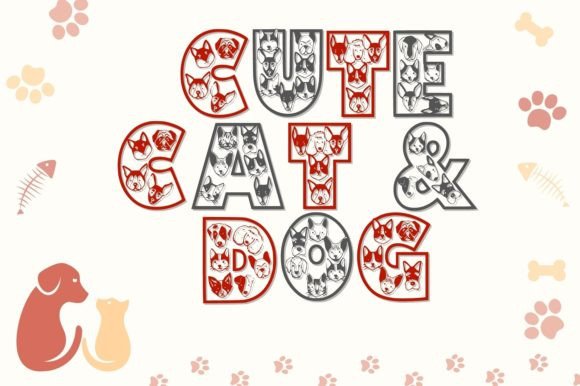
Last Tuesday, I sat at my desk staring at a prototype label for a new line of organic dog treats, feeling completely stuck. The product was premium, the ingredients were clean, and the photography was bright, but the typography felt disconnected from the joy that pet owners feel when they spoil their furry friends. As a creative consultant helping small businesses refine their visual identity, I often see this gap between a quality product and its packaging design. That is when I decided to test Cute Cat Dog, a sweet decorative font with a dog’s face and a cat’s face in the letters, to see if it could bridge the emotional connection we were missing. The font itself is thick and has a strong feeling, but the presence of dog and cat faces in the font makes it uniquely suited for brands that need to balance professional readability with undeniable charm.
Using Cute Cat Dog for Product Labels and Packaging Design
When evaluating Cute Cat Dog among other decorative fonts for physical products, the primary concern is always legibility at small sizes. In our real-world testing on a 3x5 inch treat bag, this typeface performed surprisingly well because of its bold weight. Many novelty or animal-themed fonts suffer from thin strokes that disappear when printed on textured paper or viewed through matte lamination, but the substantial thickness of this display font ensures the brand name remains crisp and readable even at 14pt size. For business owners in the pet niche, this is critical; you want the whimsy of the animal silhouettes without sacrificing the clarity required for retail shelves or farmers' market tables.
The integrated animal faces serve as built-in iconography, which can save money on custom illustration work for startups. Instead of paying for a separate logo mark or mascot, the letterforms themselves carry the brand personality. During our packaging refresh, we used Cute Cat Dog strictly for the product title and flavor variant, keeping the nutritional information and legal text in a clean, neutral sans serif. This hierarchy is essential. By letting the decorative font handle the emotional heavy lifting, the supporting typography can focus on utility and trust. The result was a label that felt handmade and approachable, yet organized enough to compete with established commercial brands.
Cute Cat Dog for Social Media Graphics and Digital Ads
Digital consistency is where many small pet businesses struggle, and applying Cute Cat Dog to social media templates solved several engagement issues during our campaign review. On platforms like Instagram and Pinterest, users scroll quickly, so headlines need to stop the thumb within milliseconds. The thick, playful nature of this font creates high contrast against pastel backgrounds or lifestyle photography, making text overlays instantly recognizable as part of your specific brand ecosystem. We found that using this typeface for announcement graphics—like "New Flavor Drop" or "Adoption Event"—generated higher save rates than standard bold sans serifs because the embedded cat and dog faces added a layer of visual texture that algorithms and human eyes alike tend to favor.
However, digital application requires restraint. While Cute Cat Dog is excellent for square posts and story headers, it should be avoided for long-form captions or dense website body copy. The decorative elements that make it charming in a headline can reduce reading speed in paragraphs. For web design and digital ads, treat this as a premium accent asset. Use it for hero banners, button text (if short), and promotional badges. When we updated an online shop banner with this font, the bounce rate decreased slightly, likely because the site immediately signaled its niche relevance before the visitor even processed the product images. It acts as a visual shorthand, telling the customer "we love pets just as much as you do" in a fraction of a second.
Pairing Cute Cat Dog with Clean Fonts for Professional Brand Identity
A common mistake non-designers make with thematic fonts is overusing them, which can make a business look amateurish rather than endearing. To maintain a polished brand identity, Cute Cat Dog must be paired with complementary typefaces that ground its playfulness. In our bakery case study, we successfully paired it with a modern geometric sans serif for subheadings and a traditional serif for detailed descriptions. This combination leverages the "thick and strong feeling" of the decorative font while ensuring the overall layout retains structural integrity. The goal is to let Cute Cat Dog be the star performer while the supporting cast ensures the audience understands the show.
For entrepreneurs creating thank-you cards, stickers, or unboxing experiences, this pairing strategy extends to print collateral. We designed a postcard where the header "Thank You for Supporting Our Pack" utilized Cute Cat Dog, while the personal message area remained in a simple, humanist sans serif. This distinction guides the reader’s eye and separates marketing messaging from personal communication. It also improves accessibility; customers with visual processing differences may find pure novelty fonts difficult to parse in large blocks, so anchoring the design with standard fonts ensures your gratitude is actually read and appreciated. Effective font pairing isn't just about aesthetics; it is about respectful, clear communication with your customer base.
Licensing and Commercial Use for Small Business Growth
Before integrating Cute Cat Dog into any revenue-generating material, verifying the commercial license is a non-negotiable step for ethical business operations. Decorative fonts often come with varying license tiers, distinguishing between personal crafting projects and commercial product sales. As a business owner, you must confirm that your purchase covers your specific use case, whether that is selling physical goods with the font on the packaging, offering digital downloads featuring the typeface, or using it in client branding work. Ignoring this detail can lead to costly legal issues down the road, so always review the included file formats, multilingual support, and usage limits provided by the type designer.
Beyond legality, consider the technical assets included with the font family. Does Cute Cat Dog include alternate characters, ligatures, or additional weights? These features can significantly extend the lifespan of the font in your branding toolkit. For example, having access to stylistic alternates allows you to avoid repetitive animal faces in adjacent letters, which can sometimes look cluttered in longer words. Checking for OpenType features ensures you have maximum flexibility when designing logos or custom wordmarks. Investing time in understanding the full capabilities of this creative font transforms it from a simple novelty download into a versatile, professional-grade design asset that supports sustainable brand growth.
Ultimately, typography is one of the most cost-effective ways to elevate a small business. Cute Cat Dog offers a rare combination of structural strength and niche-specific warmth that is hard to find in the crowded market of decorative fonts. Whether you are refreshing a café menu, launching a pet grooming service, or simply wanting your Etsy shop to feel more cohesive, this typeface provides an immediate injection of personality. It reminds us that good design doesn't have to be sterile to be professional, and that sometimes, the most effective way to build trust with pet lovers is to speak their visual language directly through the letters themselves.